
The Stories We Tell Ourselves About Work
I found out on the morning of March 31, at the same time as 30,000 of my fellow Oracle colleagues.
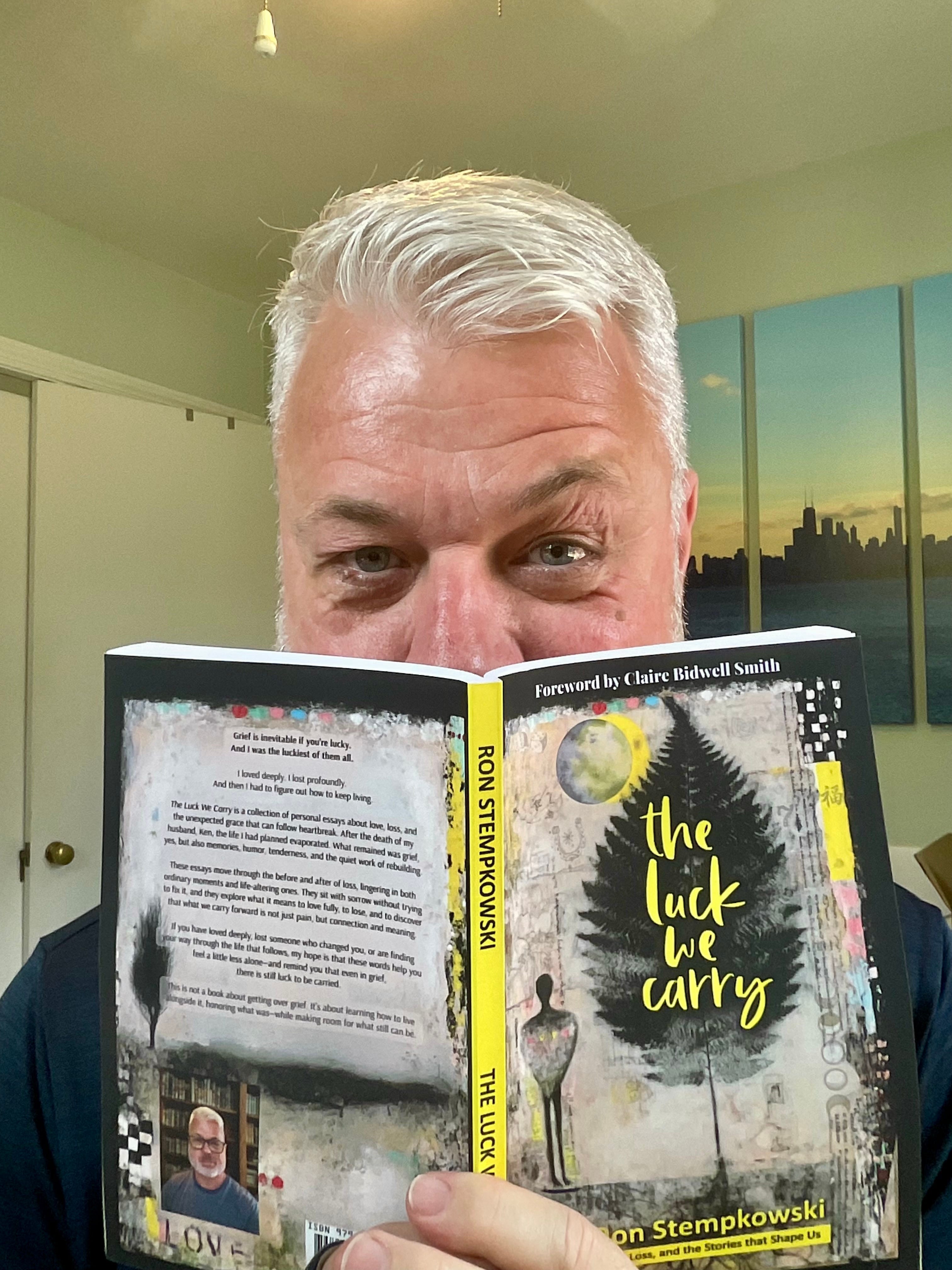
I’d gone to the gym in the morning. It was my last day of PTO. I’d taken the previous week off and the first two days of the next week off to work on the launch of my memoir, The Luck We Carry: Love, Loss, and the Stories that Shape Us. It’s a memoir I’d been working on generally for ten years, but more specifically, this version for the last two. It holds the stories of my life around meeting, falling in love with my husband Ken, and then losing him to cancer after ten years together. Each essay has an author’s note with my reflections on that time in my life. I’m incredibly proud of it because I’ve wanted to be a published author since I was 13.
When I pulled into the garage that morning, I grabbed my gym bag and my phone to get out of the car. But for some reason, I scrolled through messages before I did and found a notification in the “spam” folder—something I do once in a while since this feature was added in the last iOS update. I opened up the unknown message to read:
I’m sorry to have to do this while you’re on PTO, but I’m afraid I have to ask you to check your Oracle emails as a matter of urgency.
It was from my boss. I knew she wasn’t texting me from the UK to tell me I got a raise. (I have no hard feelings. She is a lovely human being.)
Something I’ve learned from years of writing personal essays and journaling: we are always—whether we realize it or not—in the middle of a story we’re telling about ourselves. Not a lie, exactly. More like an ongoing narration. A way of making sense of where we’ve been and where we think we’re headed.
My story, for a long time, was a professional one. I was a communicator. A writer. Someone who worked at a large company, did work and was good at it. That identity had weight to it. It had a title, a salary and a calendar full of meetings that told me, every day, where I was.
As I read the practically anonymous email from “Oracle Leadership” (not from a person who would take on the weighty responsibility of delivering such a message), I felt a swirl of emotions, but the one I recall most vividly was relief. I read the email and texted my boss back, saying I’d read it and had enjoyed getting to know her over the previous 4 years. I was then locked out of the remaining systems I hadn’t already been locked out of. It felt unceremonious. Like a door literally hitting my backside on the way out—though I’d done nothing wrong. None of us had.
What nobody tells you about a layoff—at least nobody told me—is that it’s not just a job you lose. It’s a narrative.
The work itself, sure. The routine, the colleagues, the sense of forward motion. But underneath all of that is something subtler and harder to name: the story you’d constructed around the work. The one that answered the question who are you? when someone asked at a dinner party. The one that gave shape to your days and meaning to your effort.
Lose the job, and you lose the story. And for a while, you’re just standing in the wreckage of the plot, wondering what comes next. I’m not the first person to experience this. I won’t be the last. But I do think I had an unusual resource at hand.
I had a published book.
The Luck We Carry: Love, Loss, and the Stories That Shape Us had been living inside me for years, taking shape in notebooks and drafts in Ulysses—my favorite writing app—and early-morning revision sessions. It’s a collection of personal essays about the moments that define us: grief, love, memory and the strange grace of the ordinary days that follow.
I’d been writing about stories my whole life. About how we use them to survive loss. About how the narratives we inherit from our families—about who we are, what we deserve, what it means to love someone—quietly run in the background of every decision we make, like code we never chose but somehow execute perfectly.
And here I was, living inside the thing I’d been writing about.
There’s a particular kind of clarity that arrives when you’re forced to stop. Not the peaceful kind you read about in mindfulness articles. The uncomfortable kind. The kind that shows up uninvited and starts rudely asking questions you’ve been successfully avoiding.
Why did that job mean so much to you?
What were you actually building there?
If the title goes away, what’s left?
I didn’t have good answers at first. Mostly, I had Hudson, a pot of coffee, and a scheduled author event and book signing that suddenly felt more urgent than it had before. Because I realized, in those first strange days of unemployment, that marketing and sharing the book wasn’t a consolation prize. It was the story I actually wanted to be telling.
Here’s what I’ve learned from writing personal essays, if you do it long enough and honestly enough: the stories we tell ourselves are not fixed. They feel fixed. They feel like facts, like biography, like the permanent record. But they’re not.
They’re drafts.
And drafts can be revised.
The story I’d been telling—*I am my job title, my company, my professional output*—turned out to be a first draft. Useful for a while, true in some ways, but incomplete. The layoff didn’t destroy that story so much as it exposed its limitations.
What I’m doing now—promoting the book, yes, but also this next chapter of whatever my professional life becomes—feels more like a second draft. Messier in some ways. Less certain. But closer to something real.
The Luck We Carry came out on March 23. I’m proud of it, the way you’re proud of something that cost you to make. I’m also still figuring out the rest. The job search is ongoing. The calendar is emptier than I’d like. Some days the uncertainty is energizing, and some days it just feels like uncertainty.
But I keep coming back to something I wrote in an early draft of the book that stuck with me, almost without realizing what I was saying at the time: the stories that shape us are rarely the ones we planned. They’re the ones we were brave enough—or desperate enough—to live through.
I’m still living through this one.
I think that’s okay.
What story have you been telling yourself—and when did you last stop to read it?


A story I tell myself: I often catch myself saying, "I'm just a support person," not a writer. My publisher told me the other day that I wrote a book, and therefore I'm not "just a support person" but a CEO and founder. I have to remember that.